Why Most Cleanses Fail— and the Smarter Way to Reset Your Body This Spring
Spring has a way of getting our attention.
As the days grow longer and the light shifts, many people begin to feel a natural pull toward renewal—not just in their surroundings, but in their bodies and daily habits.
It is often around this time that a familiar thought arises: perhaps I need a cleanse.
And yet, if you have tried one before, you may already know how that story often unfolds.
A few days of restriction.
A sense of discipline.
Followed by fatigue, frustration, or simply returning to old patterns.
So the real question is not whether cleansing has value.
The question is: why do most cleanses fail—and what would actually support meaningful, lasting change?
The Problem with Most Cleanses
Most cleanses are built on a single idea: remove, restrict, eliminate.
Cut out sugar.
Avoid certain foods.
Drink this instead of that.
While this may create short-term awareness, it often overlooks something far more important—your habits, your environment, your patterns, and your relationship with your body.
There is also a deeper challenge.
When the focus is primarily on what you cannot have, it can create pressure or rigidity—making it harder, not easier, to sustain change.
This is not a question of willpower.
It is often a reflection of an approach that is too narrow for the complexity of real life.
Part of the challenge is that we tend to focus more on what is not working than on what is already supporting us.
Over time, this can create a pattern of trying to fix, correct, or eliminate—rather than noticing what the body may already be doing well.
And when the focus is only on what needs to change, it becomes harder to build consistency around what is already working.
A More Complete Way to Think About Cleansing
Over the years, both through my work and my own experience, I have found that a more sustainable approach begins with a different question.
Not just: What should I remove?
But also: What can I support, and what can I become more aware of?
This shift changes everything.
At the heart of this is a simple but often overlooked understanding: your daily patterns shape how you feel over time.
If you’re ready to begin approaching your habits in a more structured and sustainable way, the 21-Day Reset offers a clear place to start: you can enroll until May 6th but early discounted registration end this Tuesday, April 28th.
The way we eat, think, move, rest, and live—these patterns shape how we feel over time.
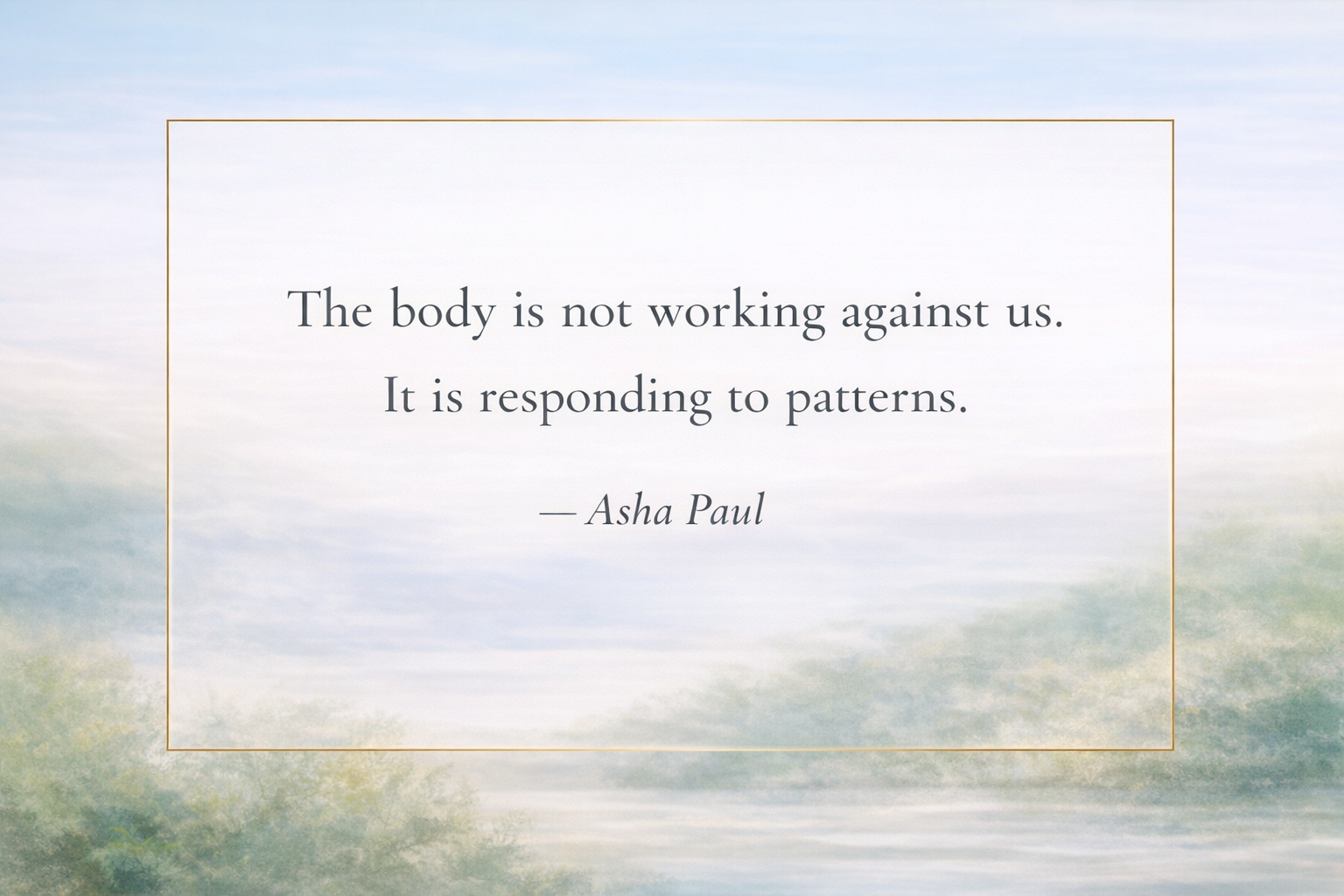
When those patterns are out of sync, the body reflects that—not as failure, but as feedback.
Because now, instead of working against yourself, you begin working with your body, your habits, your mind, and your environment as an integrated system.
A meaningful reset is not just physical.
It can include how you hydrate, how you breathe, how you eat, how you respond to stress, how you think, and even the space you live in.
When these begin to align, change tends to feel less forced—and more sustainable.
Why a Reset May Serve You Better Than a Traditional Cleanse
The word cleanse is widely used, and understandably so—many people are looking for a fresh start.
However, it is often associated with quick fixes, rigid rules, or short-term approaches that do not translate into daily life.
A more grounded approach is what I would describe as a reset.
A reset is not about perfection.
It is about recalibration.
It is a period of time where you intentionally bring awareness to your habits, introduce supportive practices, and begin shifting patterns in a way that is realistic and sustainable.
This kind of approach is designed to support digestion, energy, and overall well-being—not through force, but through consistency and awareness.
What Most People Overlook
One of the most common limitations of traditional cleanse approaches is that they focus almost entirely on food.
Food matters—but it is only one part of the picture.
Hydration: How and when you drink water can influence how your body feels throughout the day.
Breath and Nervous System: Your breathing patterns can influence stress, clarity, and your ability to stay grounded.
Mental Patterns: Your thoughts and repeated inner habits often shape behavior more than any short-term plan.
Home Environment: Your surroundings can either support your well-being or quietly work against it.
Emotional Patterns: What you hold onto—consciously or unconsciously—can influence your habits in powerful ways.
Sleep and Daily Rhythms: The quality of your sleep, your daily timing, and how you move through your day can quietly influence your energy, mood, and overall sense of balance.
Food—But Not in the Way You Might Expect
Food is absolutely included in this process.
However, instead of rigid rules or restriction, the focus is on awareness and relationship.
One of the early practices explores what I call the Three C’s—a simple framework that helps bring more consciousness to how you eat (this is explored in more detail within the 21-Day Reset).
How are you choosing your food?
How are you eating it?
What kind of environment are you creating around meals?
This allows food to become a place of clarity rather than control.
A Guided and Thoughtfully Structured Approach
To support this more integrated way of working, Russill and I created a 21-day guided reset experience.
Rather than leaving you to figure things out on your own, this offers a clear daily structure that brings together:
food awareness without rigid rules
hydration practices
breath and meditation
journaling and reflection
home environment shifts
simple daily actions that build progressively
You are guided step by step throughout the 21 days, with short lessons and practices, and guidance during the experience—so you are not left trying to piece everything together on your own.
Designed for Real Life
One of the most important aspects of this 21-day experience is that it is designed to fit into real life.
The lessons and practices are intentionally short, clear, and easily doable—even for busy individuals.
You are not expected to overhaul your routine or spend hours each day trying to keep up.
Instead, the focus is on small, consistent actions.
Because sustainable change rarely comes from doing more.
It more often comes from doing what is realistic—and repeating it with awareness.
Who This Is For
This guided reset may be supportive for those who:
are looking for a reset, especially during seasonal transitions
want to move beyond quick-fix approaches
prefer a more integrated, whole-life approach
appreciate structure without rigidity
want something practical, grounded, and thoughtful
A Thoughtful Next Step
If you have been feeling the need for a reset—whether physical, mental, or simply in how you are moving through your daily life—this may be an opportunity to approach it differently.
Not as something to push through—but as something to engage with, step by step.
The 21-Day Reset is designed to support that process through a guided and thoughtfully structured experience that you can follow from home.
Sometimes, the most meaningful change begins not with doing more—but with approaching things differently.
If you’re ready to move beyond quick-fix cleanses that don’t last, the 21-Day Reset offers a clear, structured way to begin—through practical, daily steps designed to support your digestion, energy, and overall well-being. Enrollment is now open.
If you have been feeling the need for a seasonal of renewal — one that honors your body, mind, and spirit — I invite you to join us in this process.