When Your Hardest Feelings Are No Longer the Enemy
Stop fighting old reactions—and start building what’s next.
You replay a conversation long after it ends. You expect disappointment even when things are going well. You want to pursue something meaningful, but keep waiting until you feel more confident, more certain, or less afraid.
Then you become frustrated with yourself.
Why am I still reacting this way? Why can’t I just move on?
For years, the biggest mistake I made with anger, anxiety, or sadness was treating them like enemies to be fixed. I wanted to stop feeling them. When they returned, I felt defeated—and then became angry with myself for not being able to move on.
That struggle caused me enormous suffering and anguish. I was so busy trying to get rid of my feelings that I rarely stopped to ask what I had lived through, what I feared, or what I needed.
If you recognize this struggle, you know how exhausting it can be. You want to understand your reactions, but you also want something to change in the way you live.
That is where my story begins.
Learning to watch the room
Growing up in South India in the 1970s and ’80s was precious to me in many ways. Yet home could also feel unpredictable. My mother’s fierce mood swings baffled me, and her emotional immaturity and neglect pained me.
She was an excellent cook who prepared home-cooked meals for us. I value that care. But I could not lean on her for emotional support or confide in her, either as a child or during my teenage years.
I saw my peers turn to their mothers for comfort, advice, and reassurance. I longed for that closeness. Instead, I often felt alone with feelings I did not know how to carry.
By 18, I wanted to create a life far from the emotional upheaval I had experienced for as long as I could remember. Those experiences had taught me to watch other people’s moods and approach the world from a place of fear. I wanted to feel emotionally safe.
My father offered a different kind of care. He was not demonstrative in his affection, but he was tender and caring in the best way he knew how. He cheered me on, whether I chose sports or academia. His belief in me mattered.
You can cherish parts of your childhood and still acknowledge what was missing. Gratitude does not require you to deny hurt. Love does not make an unmet emotional need disappear.
The event ended. The fear stayed.
I fell in love at 18, and at 21 I left India with my beloved to begin our life together.
Just as we were preparing to fly out of Mumbai, a man entrusted by someone we deeply respected to accompany us robbed us of all our money and the heirloom jewels my parents had given me—including our wedding bands.
We were a young couple whose hard-earned money was gone, stranded on the streets of Mumbai, far from our hometown of Chennai.
What stayed with me was more than the loss. Someone we believed was safe had betrayed our trust at the moment we were stepping into a new life. I was terrified, but I was also angry.
For the next twenty-five years, I watched our backs, expecting another betrayal might be around the corner.
We built a life. We worked, loved, created, and pursued dreams. From the outside, I may have looked like a woman who had left that day far behind.
Inside, I was still watching.
Your circumstances may be different. But do you recognize the habit of anticipating what could go wrong? Reading someone’s tone for signs of rejection? Holding back from an opportunity because disappointment feels harder to face than never trying?
You can accomplish meaningful things while still feeling held back inside.
How much of your life goes into fighting yourself?
I tried to reason my way out of my feelings. Years had passed. I was no longer stranded in Mumbai. Surely I should be able to put it behind me.
But telling myself to stop being afraid did not make me feel safe. Judging my anger did not help me understand it. Being grateful for our life did not erase the sadness of what I had needed and lost.
Anxiety kept me on guard. Anger exhausted me. Sadness seemed to pull me backward.
I did not yet see how much energy I was spending fighting myself.
You may recognize that second struggle: feeling something painful, then criticizing yourself for feeling it. You tell yourself you are too sensitive, too emotional, or taking too long to move on.
What changes when you listen before judging?
Sometimes my anger said, That should not have happened.
Sometimes my sadness said, I needed someone.
And often my anxiety asked, How can I be sure I will be safe this time?
Listening gave me room to acknowledge what I felt and consider what the present situation required. A fear could deserve attention without deciding my next move.
Understanding is a beginning. Practice brings it into your life.
In my early fifties, just as I was publishing my second book, I worked with a cognitive behavioral therapy (CBT) therapist for three months.
She validated that my childhood had included emotional neglect and helped me understand that I did not need to feel guilty for speaking honestly about it. Her help mattered deeply.
My emotional wellbeing continued to improve as I developed my own programs and applied the work that became part of my Post-Traumatic Growth (PTG) Program.
Creating this work, practicing it myself, and helping students engage with it brought an important question into focus:
How do we connect what we understand with how we respond when life becomes uncomfortable?
You can recognize a pattern and still find yourself repeating it. A tense conversation begins, and you retreat. An opportunity appears, and you immediately imagine failure. You know what you want to say, but fear keeps you silent.
The PTG program brings together teaching, guided practices, and applied spirituality to help you explore those moments with greater clarity. Its purpose is to support you in learning to respond and live from a place of calm, strength, and wisdom rather than reacting from past fears and hurt.
What would that make room for in your life? Perhaps a closer relationship, a purposeful life, the confidence to speak honestly, courage to dream big, or more room for joy?
Growth does not mean being grateful for what hurt you
Painful experiences can shape how we think, feel, and respond long after they are over—even when we would never describe ourselves as traumatized. Through PTG, we can begin to acknowledge the past without being consumed by it and make room for:
Greater appreciation for life and clearer priorities.
Deeper relationships and compassion.
Recognition of personal strength.
New possibilities and directions.
A clearer sense of purpose that guides how you live.
These are possibilities for growth, not a requirement to make something good out of every painful experience.
I would never tell my younger self that the robbery was a gift.
I would not tell the child who could not lean on her mother for emotional support that she should be grateful for the pain because one day she might grow from it.
You do not have to call what hurt you a blessing to begin creating something meaningful from here.
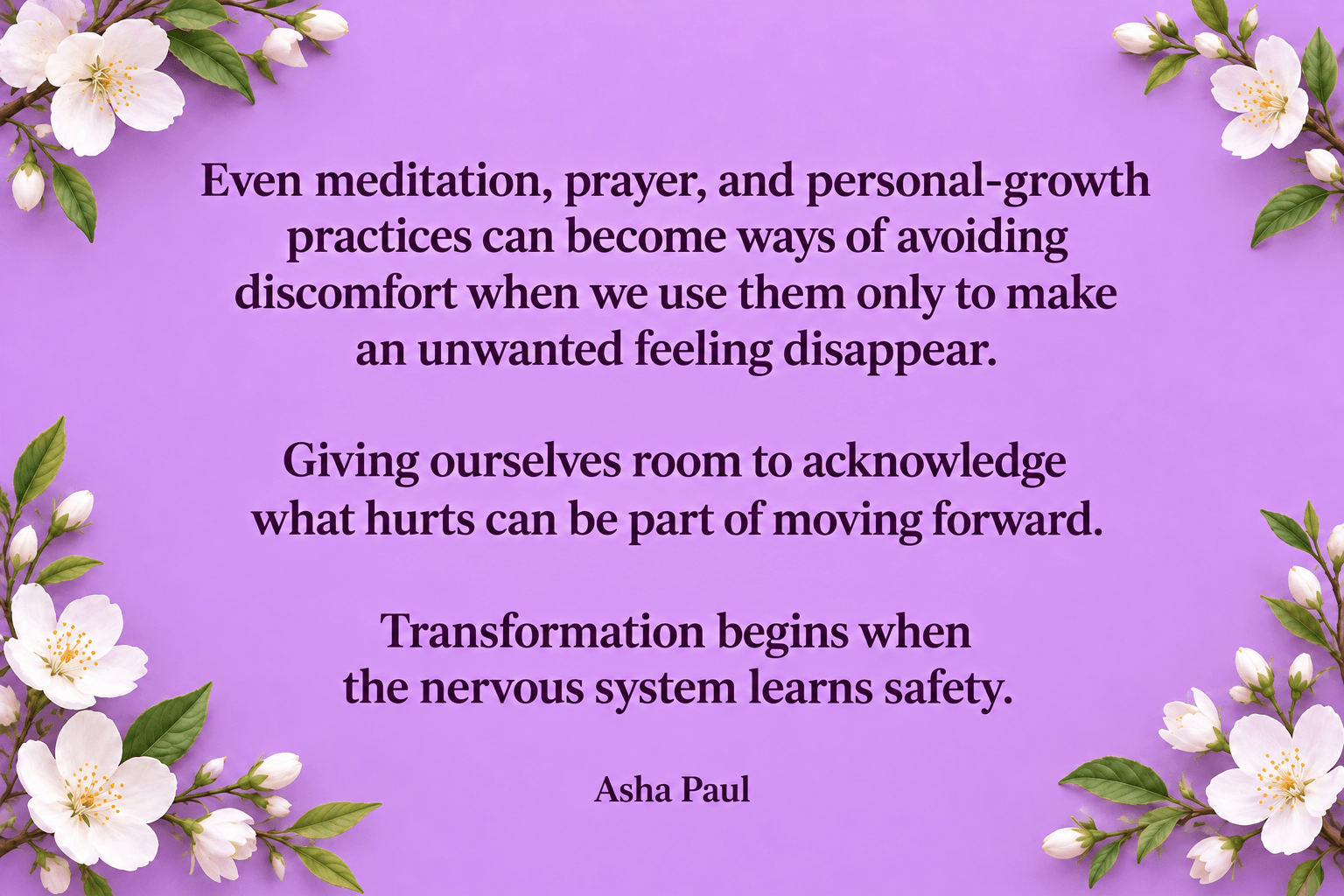
The above conviction informs my work. The PTG program includes practices designed to support calm and stress management, alongside teaching that invites you to examine how you think, respond, and approach possibility.
What Is the Past Still Costing You?
Carrying hurts for years can consume so much of life.
An old disappointment enters a new relationship. Self-doubt makes you abandon an idea before giving it a chance. Staying on guard leaves little room to enjoy what is good.
You can give these patterns attention while also giving attention to the future you deserve.
What have you postponed because you keep waiting to feel completely ready?
What would a step toward the life you want look like now?
You may need preparation, support, or a clearer plan. You may also need to notice when an old expectation is making the decision before you have considered what is possible.
Your future deserves that attention.
Give your next chapter more than a wish
I created the Post-Traumatic Growth Program for people who want to understand what has shaped them and begin bringing that understanding into the way they live.
If you are tired of recognizing the same reactions without knowing how to approach them differently, I invite you to explore the PTG program.
The program combines practical teaching with guided audio and applied spirituality. Its lessons invite you to examine the power of your choices, your relationship with your mind, and the possibilities you want to pursue.
Inside, you’ll find:
The Power You Wield and Power Your Mind: Teaching that invites you to examine familiar patterns and explore your capacity for more conscious choices.
Brainwave meditations created specifically for this program: Guided audio practices designed to support stress management, a calmer mind, and greater wellbeing.
Applied spirituality, including Soul Alchemy: Lessons that bring spiritual inquiry into your understanding of yourself and how you live, connecting soul, brain, mind, and body.
Visualization and integration exercises: Opportunities to give attention to meaningful possibilities and connect reflection with action in everyday life.
Four parts • 21 lessons • Self-paced • Immediate access • 12 months of access
You can return to the material as you practice and apply it. The invitation is to give your growth the same attention you give other things that matter—to make time, engage with the program, and begin taking steps toward what you want to create.
You can acknowledge the impact of past hurts while giving your future the care and attention it deserves. Those hurts and the fears they generate do not have to consume all the room available for your dreams, relationships, and joy.
What happened to you may have changed your life. But it doesn’t get to decide who you become.
You can begin responding to old fears with greater calm, strength, and wisdom—and taking steps toward the life you want to create.
The Post-Traumatic Growth Program is a self-paced educational program designed for personal growth and nurturing emotional wellbeing. It is not psychotherapy or clinical treatment for trauma or mental health conditions.